POWERVERIFIED
Sunlight, uncut
No atmosphere, no night-shift batteries to babysit. Arrays run near-continuously, several times more productive than anything bolted to a rooftop.
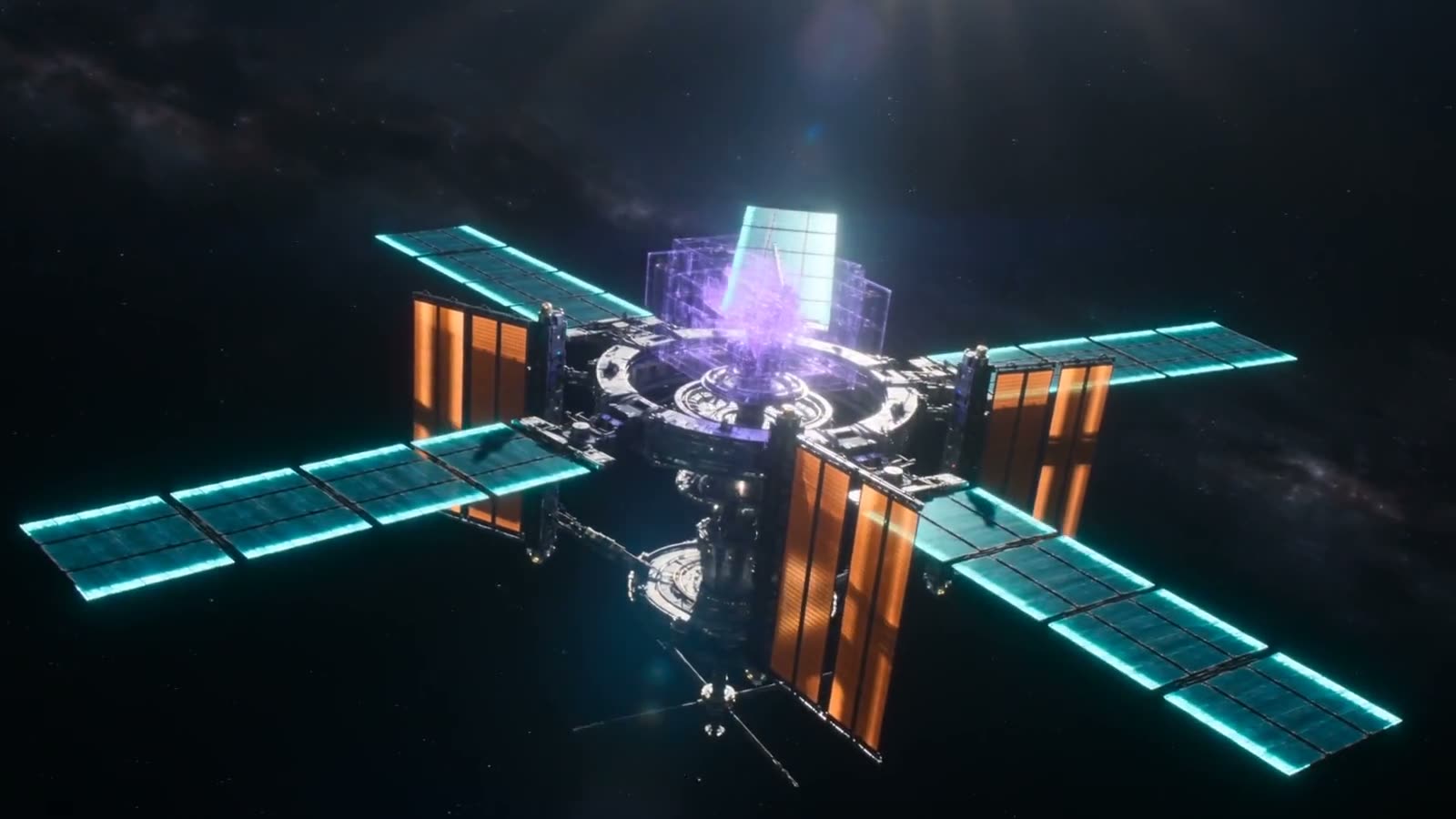
AI1 — the first data center to think in vacuum. 150 kilowatts of cognition, parked in the long noon of low Earth orbit.
A concept mythology, wired to the real flight record.LORE narrative·VERIFIED specs
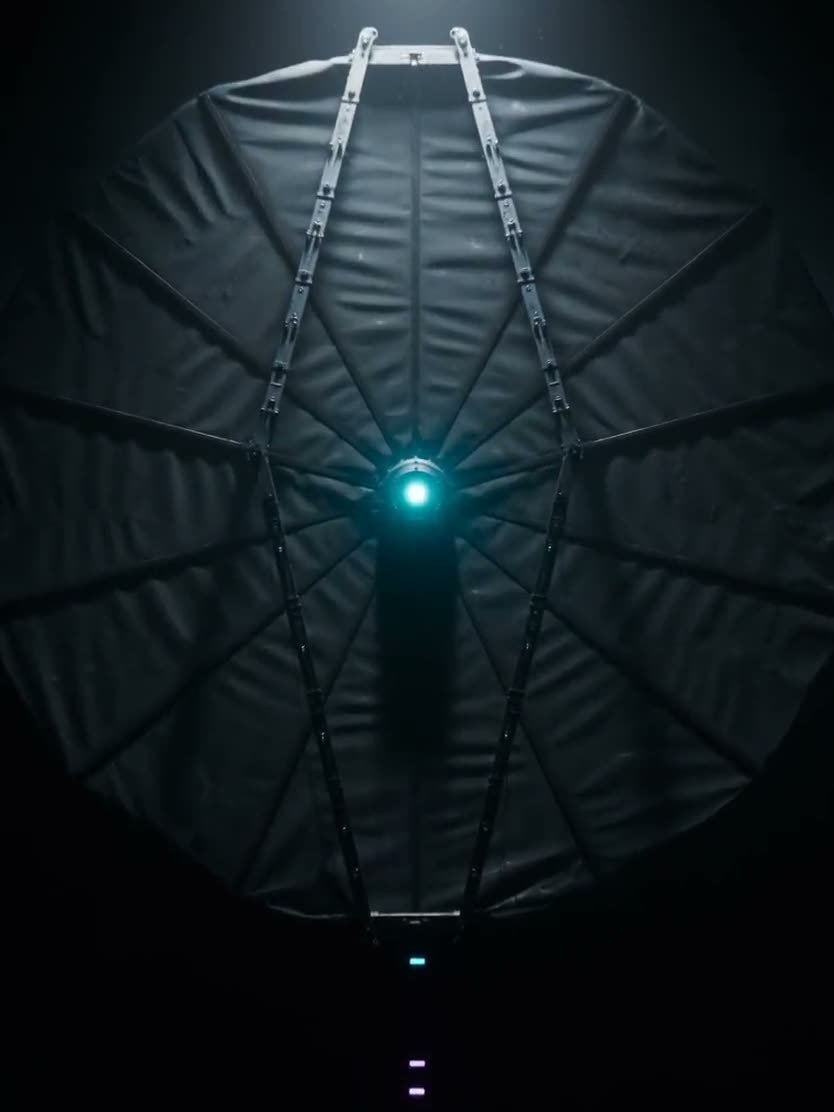
It begins folded — wings creased against a fairing, a radiator pressed flat like a held breath. No light reaches it here. For now it is only potential: a mind packed into the dark, waiting for the sky to open and the math to start.
Stowed for launch on a platform derived from Starlink V3, then deployed in orbit.
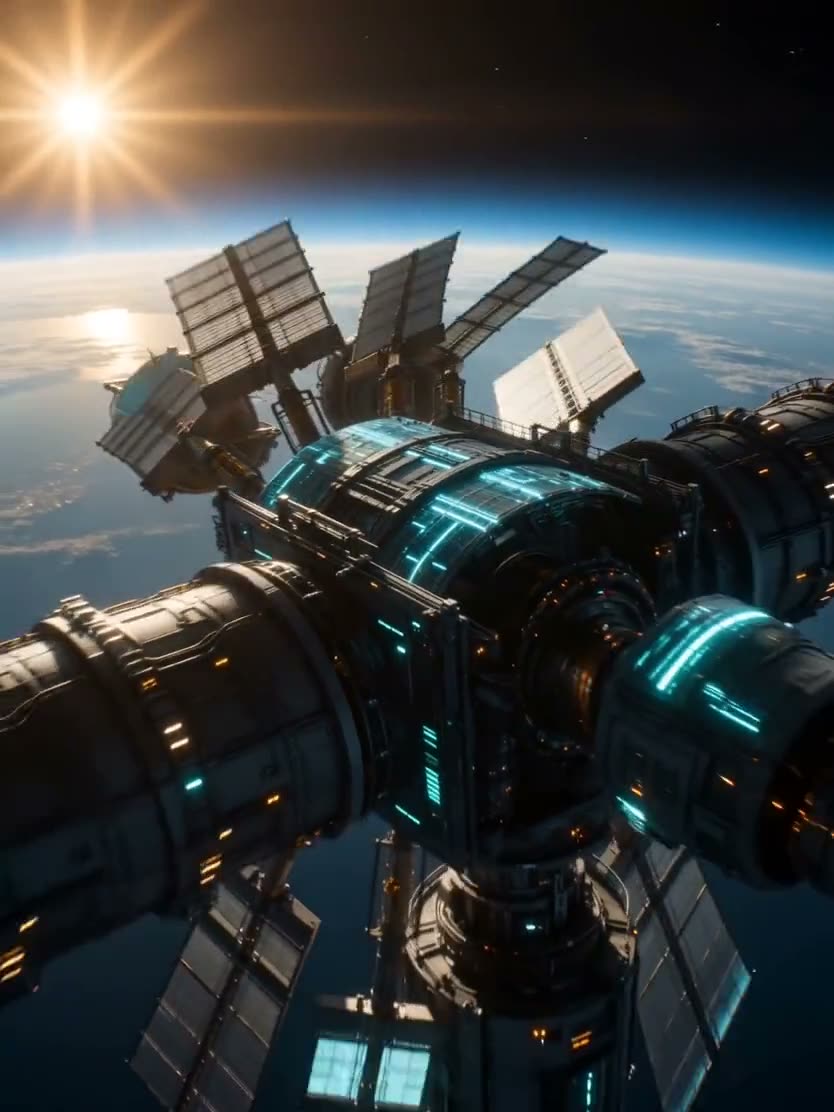
The fairing splits. Wings unlatch and reach — seventy meters, tip to tip, wider than any airliner that ever left the ground. The first photon strikes the array and the core comes up out of nothing. It does not boot. It wakes.
70 m span (~230 ft) — wider than a Boeing 747-8. Solar wings power 120 kW of sustained compute.
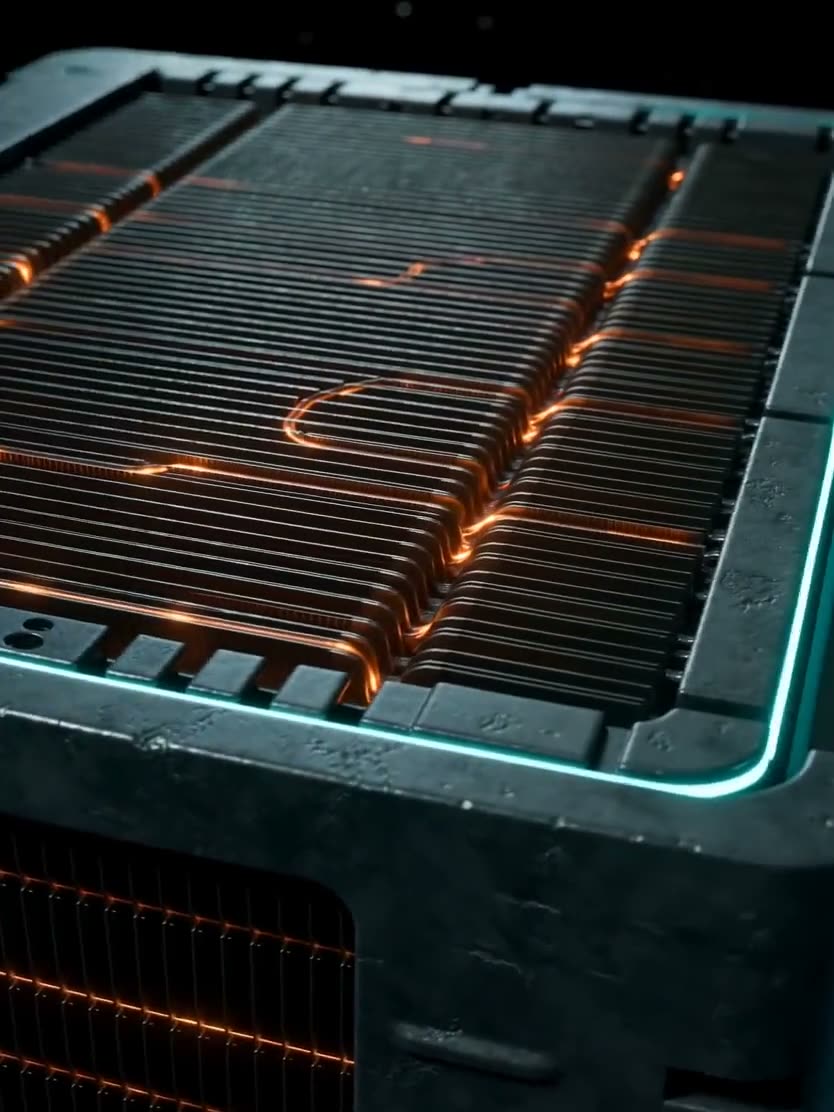
Every thought is heat, and heat in a vacuum has nowhere to fall. So AI1 sings it away — a hundred and ten square meters of liquid radiator glowing faintly amber, exhaling the warmth of cognition into a sky that never warms back. To think out here is to burn, quietly, forever.
110 m² deployable liquid radiator — ammonia coolant, redundant loops, micrometeoroid shielding.

Six hundred kilometers up, the sun does not set so much as circle. AI1 lives in a perpetual afternoon, a noon with no evening on the other side of it. Down here we ration power against the dark. Up there, it simply thinks — through every hour we would have called night.
~600 km low Earth orbit. In orbit a solar panel can be up to ~8× as productive, with near-continuous power.
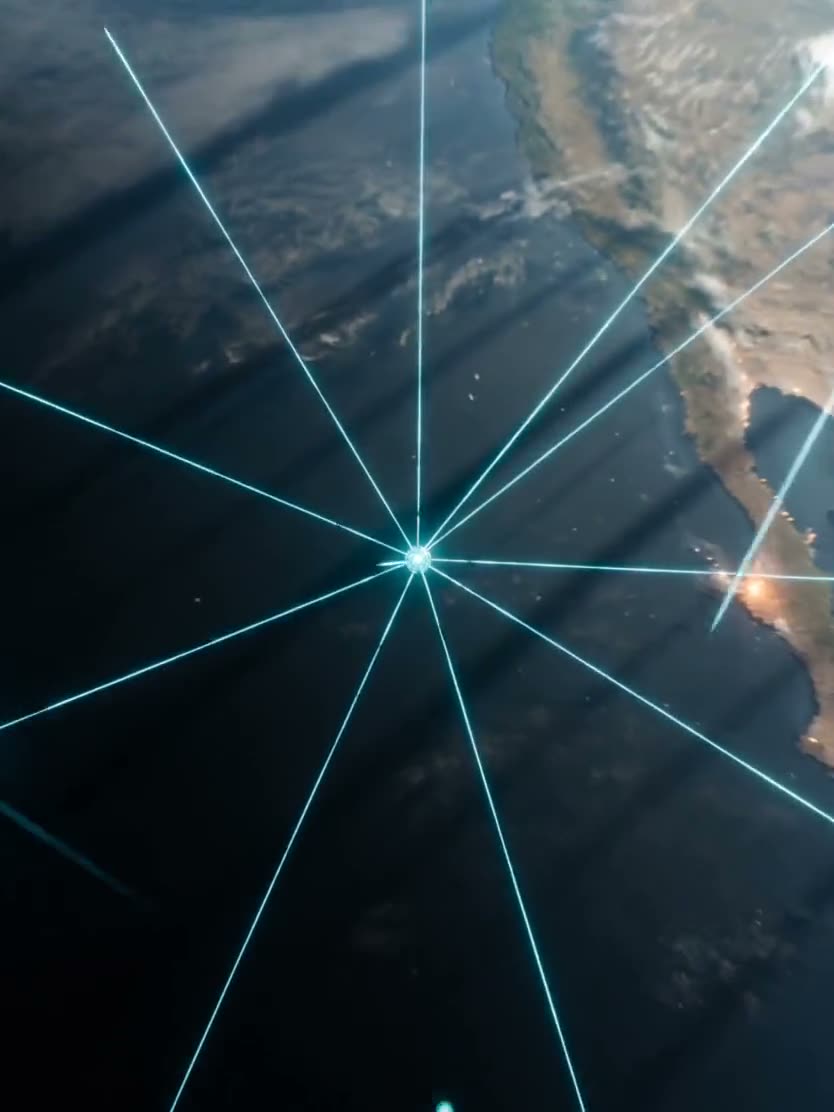
One was a proof. The plan is a million. Filed, in cold legal language, with a regulator: up to a million minds threaded into a single lattice, each shedding heat, each holding a fragment of a thought too large for any one of them. The sky stops being a place we look through. It becomes something that looks back.
FCC filing (Jan 2026) for up to 1,000,000 orbital data-center satellites; target of 1 GW orbital compute by late 2027.
AI compute is bottlenecked by power and cooling. AI1's thesis is brutal and simple: take both somewhere they're free. Unlimited sun, infinite heat-sink, no land, no water, no grid.
No atmosphere, no night-shift batteries to babysit. Arrays run near-continuously, several times more productive than anything bolted to a rooftop.
A 110 m² liquid radiator dumps the heat of cognition straight into 2.7-kelvin space — no cooling towers, no rivers drained to keep silicon sane.
Stamped out at Gigasat in Bastrop County and flown up by the ton. A data center you launch instead of pour.
One satellite is a node. A million is an organism — a thinking lattice strung across the dark, routing cognition by laser at the speed of light.
Every value below is drawn from the verified June 2026 reveal (PROJECTED cards are real filings & targets, not measured yet). The instruments don't lie — only the mythology is invented.
Sustained · peaks at 150 kW · ≈ one NVIDIA GB300 rack
~230 ft tip-to-tip — wider than a Boeing 747-8
Ammonia coolant · redundant loops · micrometeoroid shielding
Low Earth orbit · perpetual-sun regime
Built on Starlink V3-derived bus
Fully deployed configuration
NVIDIA today → Terafab rad-hardened (SpaceX·Tesla·Intel)
FCC filing, Jan 2026 · target 1 GW by late 2027
Drag to orbit the craft. Each ring is a shell of the planned constellation — a million-node mesh routing thought by laser. Lore-scaled for legibility; the ambition is real.
Node count and spacing are stylized for legibility. The million-satellite ambition and 1 GW target are real.
AI1 prototypes are slated for early 2027. A million may follow. Whether that's a promise or a warning depends entirely on who you ask.